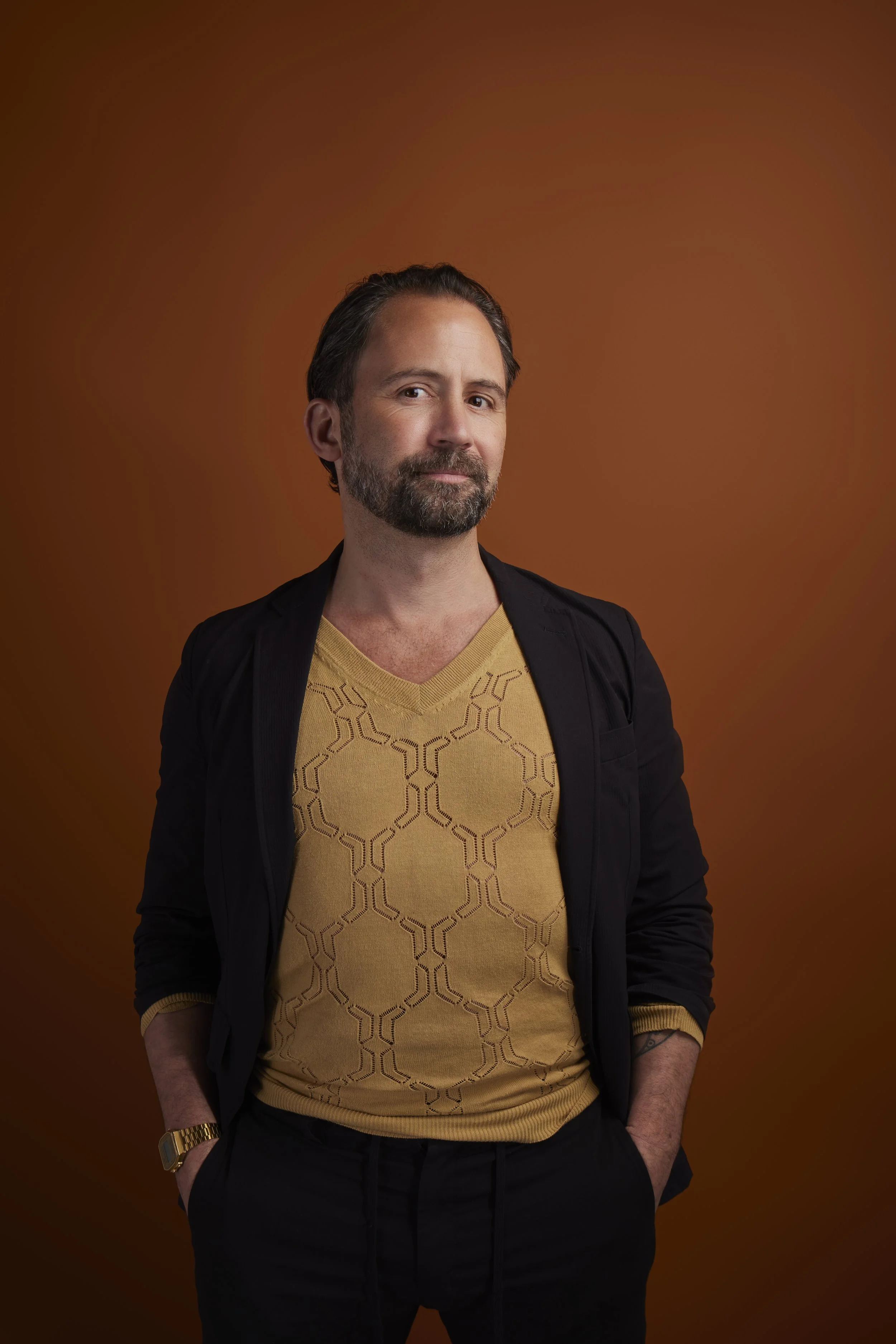
Lee Cavaliere, Artistic Director, VOLTA.
An interview between Alexandra Steinacker Clark, author of Working in Art: How to Build a Career in the Art World, and Lee Cavaliere, Artistic Director of VOLTA Art Fair.
In late 2025, I was thrilled to announce that my forthcoming book, Working In Art, will be out on the shelves from April 9th, 2026. Throughout this last year, I have been to 9 cities across 5 countries to interview arts professionals. I am so proud to have had the privilege to sit down with the mind-blowingly phenomenal people who are in the book, and who share so openly and candidly their advice for arts professionals today. These are curators, gallery directors, museum professionals, art handlers, advisors, auction house specialists, and so many more. Each person brought a unique perspective on what it means to work in the arts today.
The book serves as a resource to support those who wish to enter into the arts, but who may not know what they can do professionally in a sector they feel passionate about. Working in Art is structured around real people doing real jobs in the arts, sharing their actual career paths - the good, the challenging, and everything in between.
And to celebrate the announcement, Lee Cavaliere, the artistic Director of VOLTA Art Fair, agreed to sit down with me and be interviewed à la Working in Art. I ask Lee some of the same questions I asked my interviewees in the book, giving you an early glimpse into what the book contains, but also giving you deeper insights into the person at the helm of the Basel-based art fair we know and love.
Alexandra Steinacker Clark: What led you to the position you're in today as artistic director of VOLTA?
Lee Cavaliere: It's been a journey. I don't think there's one straight path through the art world. My degrees were in fine art, art history, archaeology, and museum design. I think it was a lot of work to break in, but really, there's not enough education in universities and art schools about how you get into the art world. They don't really talk about the real world very much. I worked a lot for myself, curating shows, organizing residencies, things like that. I worked with a university and was a lecturer early on when I was like twenty-three / twenty-four. When I moved back to London, I started working at the Tate, and I was there for four years. Then I got into the commercial sector as a gallery director for two galleries in London on Bond Street for a while. That's where I got my art fair chops because we did thirteen fairs a year or something like that. That's where I learned my art fair game but from the gallery side of things. VOLTA came a few years after. I had been independently consulting for six or seven years while also curating, and it was actually really good timing. I don't think I would have been in the right frame of mind to have done it earlier in my career. I'd had time to sit on all the experience that I'd gained which led me to be professionally developed enough to take something like this on.
ASC: It sounds to me like your first experience in the arts was kind of doing your own thing and trying to figure it out yourself, curating shows on your own. But what do you think was that moment where you felt like you'd got your foot in the door? The reason why I ask this is that people are always looking for a foot in the door, and there are so many different ways to do that.
LC: It's really hard to break in. As I say, universities don't talk about careers. They just get you to sit in a room and think about Derrida, which isn't that helpful for your future job. I had to make my own luck, in a way. I was in the Northwest of England and just had to kind of do my own thing because there really wasn't that much infrastructure for the arts. However, upon reflection, I think the “foot in the door” moment was probably the Tate. I got the job through applying on their website and it paid under £20,000 a year at an entry level in London - woefully underpaid. You're working in quite an important space with these amazing artists. I was working directly with Tacita Dean and Susan Hiller and some of my heroes, and yet still getting paid a pittance. But what it did do is teach me practical skills and actually an appreciation of how art is made.
ASC: When it comes to your responsibilities in your position, what does that look like now that you're artistic director of VOLTA?
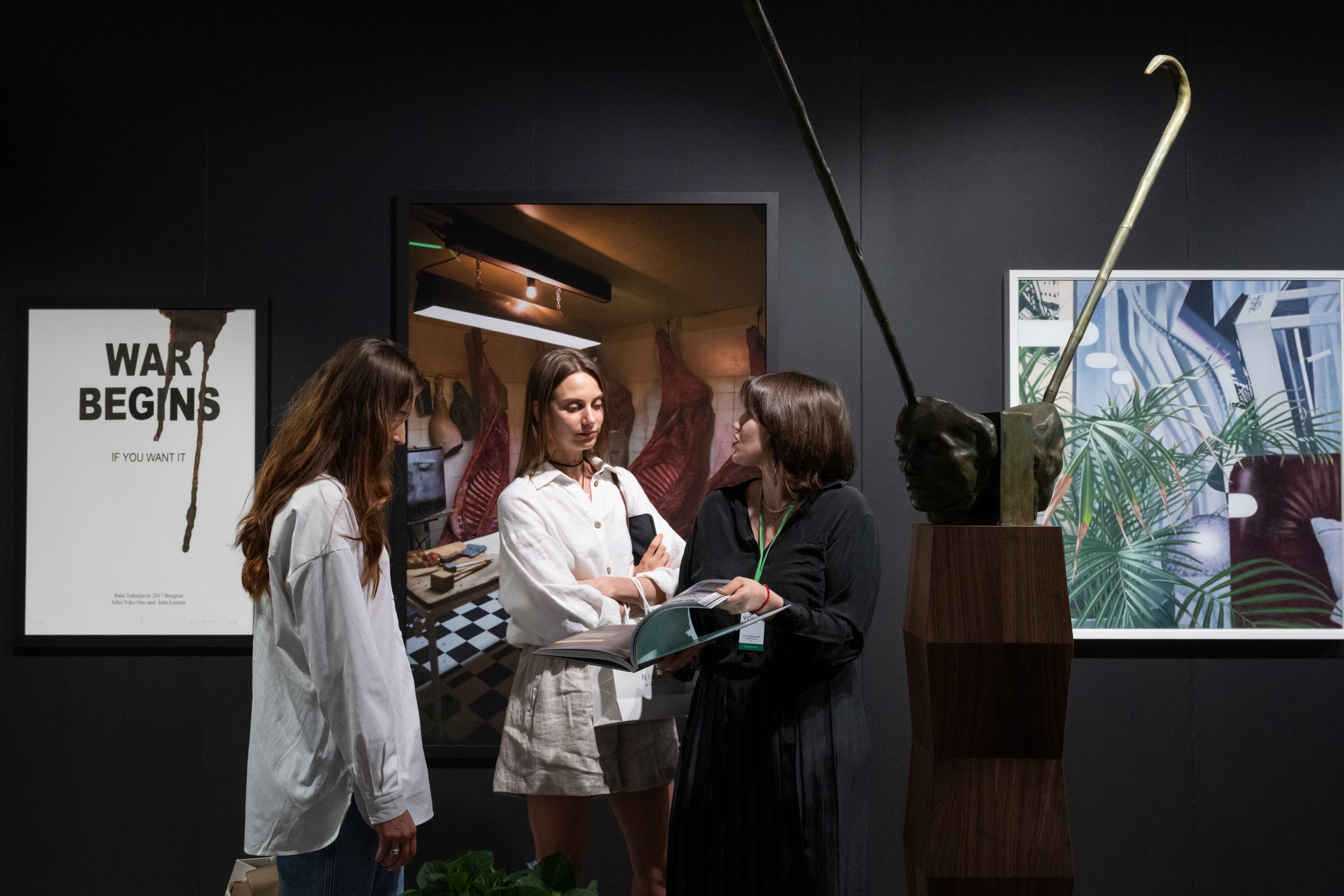
LC: Essentially, I find the galleries, place the galleries, and work with the galleries. A lot of it is about learning the gallery, learning the relationship and building the community. That means talking a lot, listening a lot, working out what the gallery's challenges are, what their ambitions are, learning about their artists so that we can really work with them to make their fair successful. I curate based on personality as well as on content. This is a collaborative world, so you want to put people next to each other that understand each other's position, maybe have something in common, or some way that they might want to collaborate in the future. This approach comes from my art fair experience as a gallerist. I have good friends from the fact that they were just between my booth and the bathroom. You don't get off your booth very much, so you just keep walking past the same people, and some connections may blossom into fruitful collaborations.
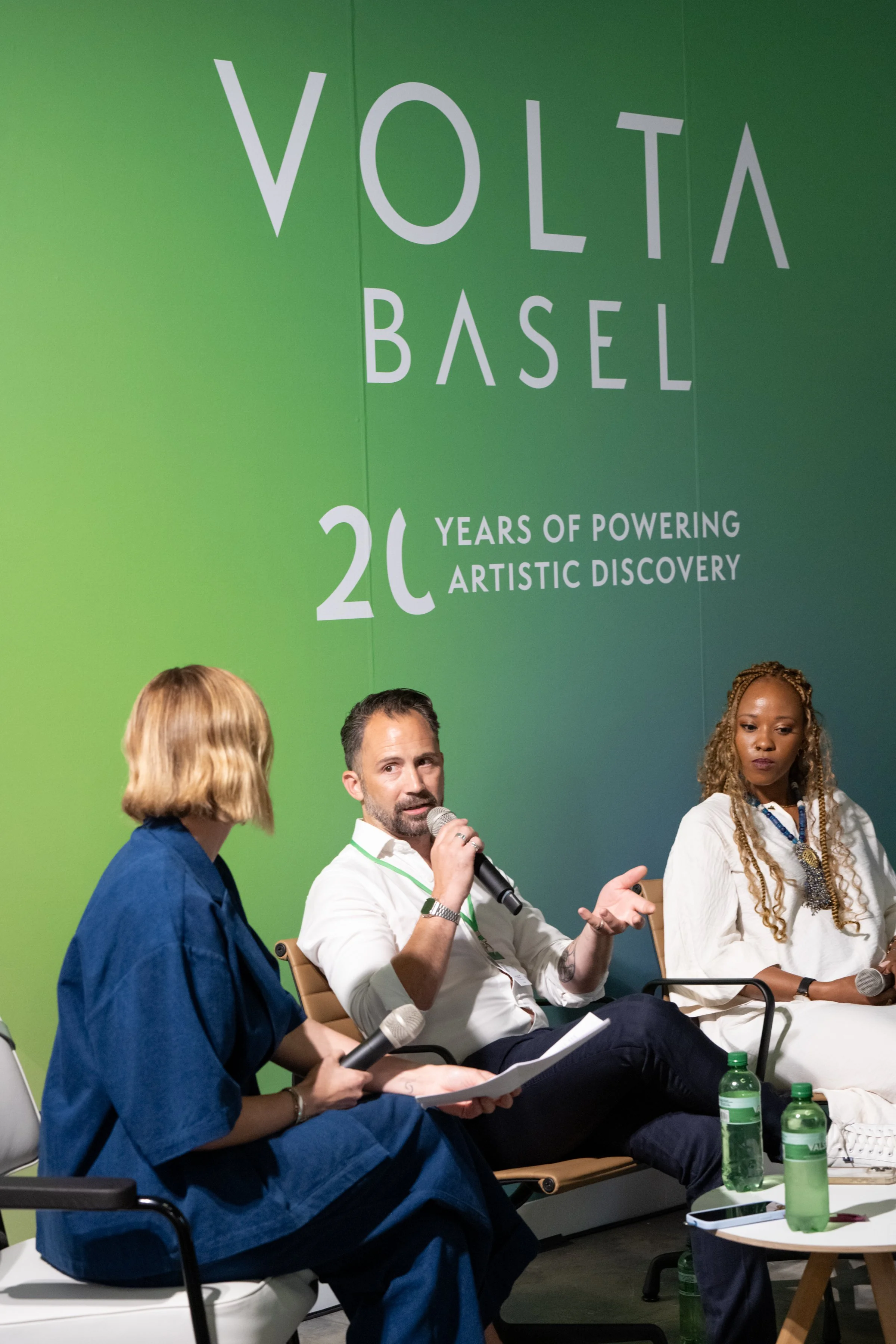
Engage + Emerge Programme at VOLTA Basel 2025
All of this means that I do a lot of talking with artists at the galleries. I'm an advocate for the galleries, but also for the fair generally. It’s my responsibility to communicate who we are, what we do, and why we do it. It’s also my responsibility to be kind of an advocate for this part of the market. I have to have an understanding of the marketplace because, as a fair, it's our responsibility to introduce people to new ways of thinking, to the artists leading the charge in the current market and those people that will be the future of the market. That is incumbent upon me to take some risks and find new voices, to use my network and my network's network to introduce new ideas. The people in Basel and the visitors to VOLTA are specifically looking for that.
ASC: Well, that leads straight into my next question because I want to ask you about Basel. VOLTA is a part of that beautiful ecosystem in Basel where basically the global art world descends on this Swiss city. What's specific about you being based in the UK, but having your fair in Basel? What does that also mean for your day to day?
LC: The thing about Basel is it’s an amazingly rooted, beautiful, old city with a real history and love and dedication to art and to culture. You never have to argue the point for art there. Growing up predominantly in the UK, you get used to art being sidelined by every political party. You have to always fight your corner in the UK, and it's infuriating. In Basel, or in Europe more broadly, you don't have that. The local Basel community of collectors, businesses, and cultural institutions is really strong, but it's also a very international city because Switzerland is built on its international connectivity.
ASC: What are the biggest challenges that you face in your profession?
LC: It's not an easy thing to do, the whole thing. When you're doing an international endeavor where you're dealing with culture and high-price objects being transported between countries, you are exposing yourself to political upheaval in a way that you wouldn't if you were just doing something local. There are always these external pressures that you can't control. The way through that is to, as I said before, really get to know the galleries, talk to them, listen to them, hear what their issues are. And then you can navigate that stuff because it's a constantly changing environment. I'm oddly optimistic. I think our area of the art market is thriving because the price points are at a point that people can access the work.
In times of crisis, in times of trouble, what do we turn to? We turn to art. We turn to the things that we love. It's either music or visual arts or theater. This is what people go to. Conflict and crisis also lead to really good art, because artists are the ones who tell the truth to these situations. They're amazingly dynamic and we want to hear what they have to say. This area of the market is rocketing because of that.
ASC: My final question to you, Lee, is if someone wanted to do what you do and be artistic director of an art fair, what's a piece of advice, or maybe even a warning, that you would give them?
LC: Remember that you don't know everything, and embrace it. Use it as an opportunity to learn and listen. The word "director" could be swapped for "conductor." I feel like a conductor in front of a very talented orchestra. I can't play the instrument, but I do know how to put it together. We've seen a lot of these galleries coming together, sharing artists, sharing ideas, making friends - lifelong friends. It's really wonderful. That's where the energy is, that's where the magic happens. This is a developing situation that hopefully is going to propel these people for years to come.