How to collect and style art for your home
Creating a home that reflects your personality goes beyond colour palettes and furniture. It’s also about the art you choose to surround yourself with. However, building a collection that feels curated rather than chaotic can feel like an intimidating task. We have turned to two seasoned interior designers who have shared their insider tips on how to choose, display, and style artwork to elevate your home and help to make it feel uniquely your own. From how to add colour, texture, and pattern, to the best places to source art and learning to feel confident in your own choices, their advice is an essential guidebook on how to collect and style art in your home.
Meet the Designers
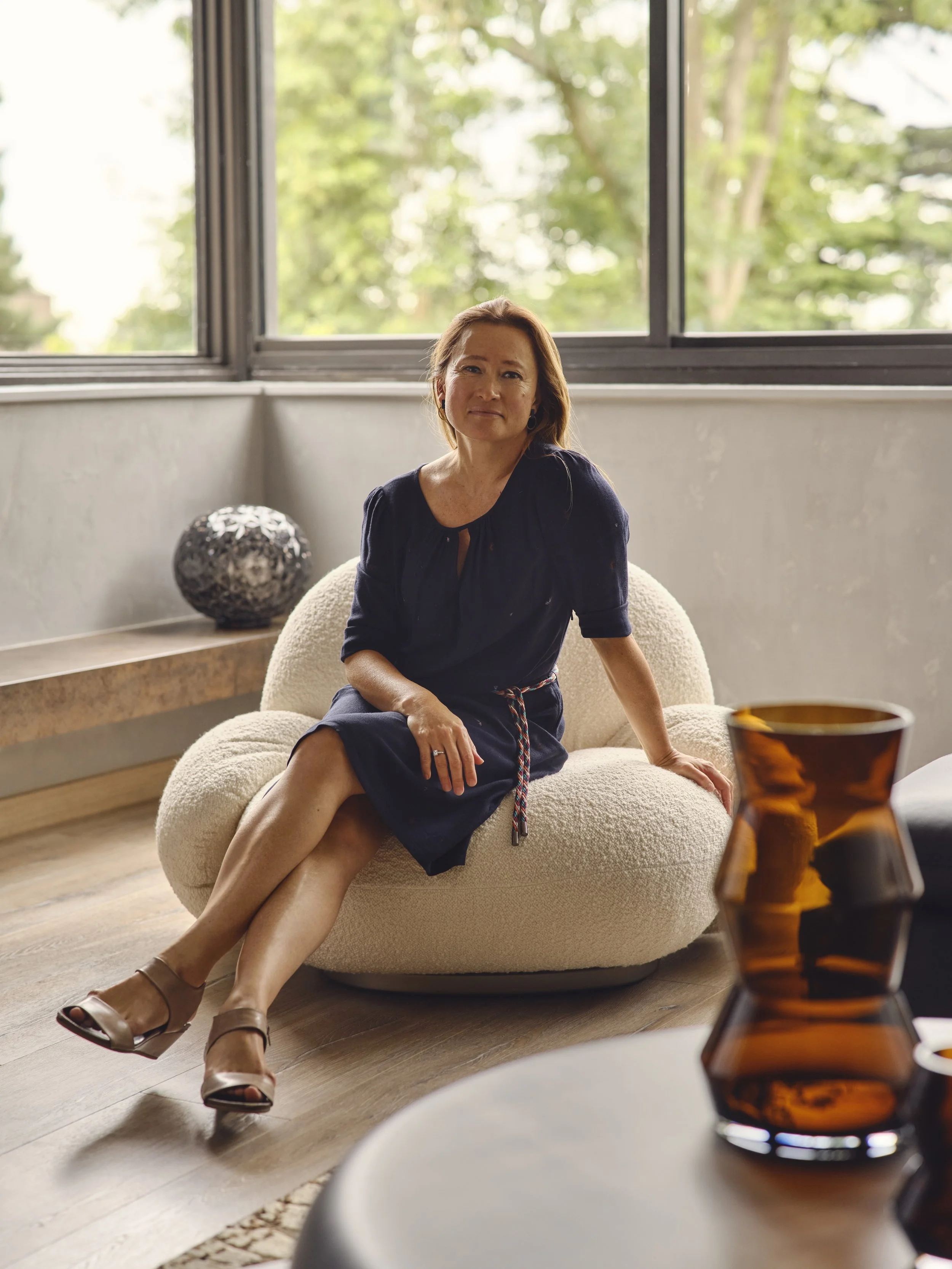
Caroline Milns is the Head of Interior at Zulufish. From a young age Caroline’s passion for travelling has informed both her design style and her love of colour and texture. Through her early career as a specialist in textile design, she became a global expert on textiles, techniques and crafts, while garnering a deep understanding and refinement of colour.
Caroline has over 25 years' experience at the cutting edge of design and interiors. She began her career as a textile designer for Monkwell fabrics, before progressing to manage a team of designers for the John Lewis home design studio. In 2007, she re-trained as an interior designer, working for Helen Green and McVitty Interior Consultants on both residential and commercial projects, before launching the interiors arm of Zulufish in 2013, promising to “strive to create timeless design & inspiring interiors”.

Katerina Bulgakova is a Kyiv born designer who began her career managing engineering and industrial projects. Over time she developed the understanding that design was her true purpose and completed her degree to follow this passion.
Katerina has developed design projects for clients around the globe, and her unique approach to these projects led her to begin the creation of her own bespoke furniture pieces. After establishing a network of artisans, the natural next step for Katerina was the opening of her own studio in Zurich.
Driven by a passion for creating objects that reinvent the culture of living, Katerina strikes the perfect balance between contemporary trends and timeless appeal. From sleek lines to bold colours, each piece exudes a sense of sophistication and style that is unparalleled.
What do you enjoy about using art to elevate your home interiors?
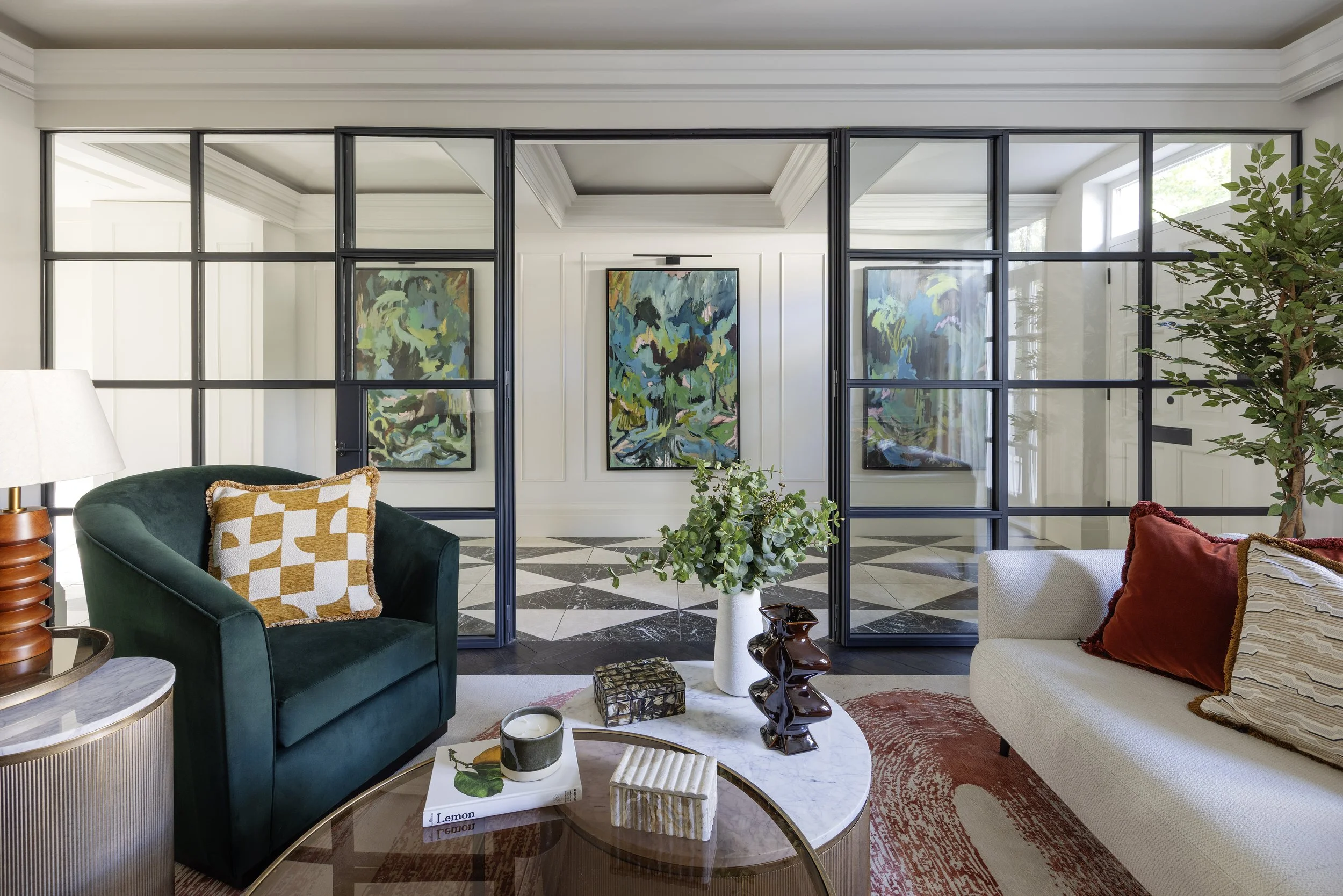
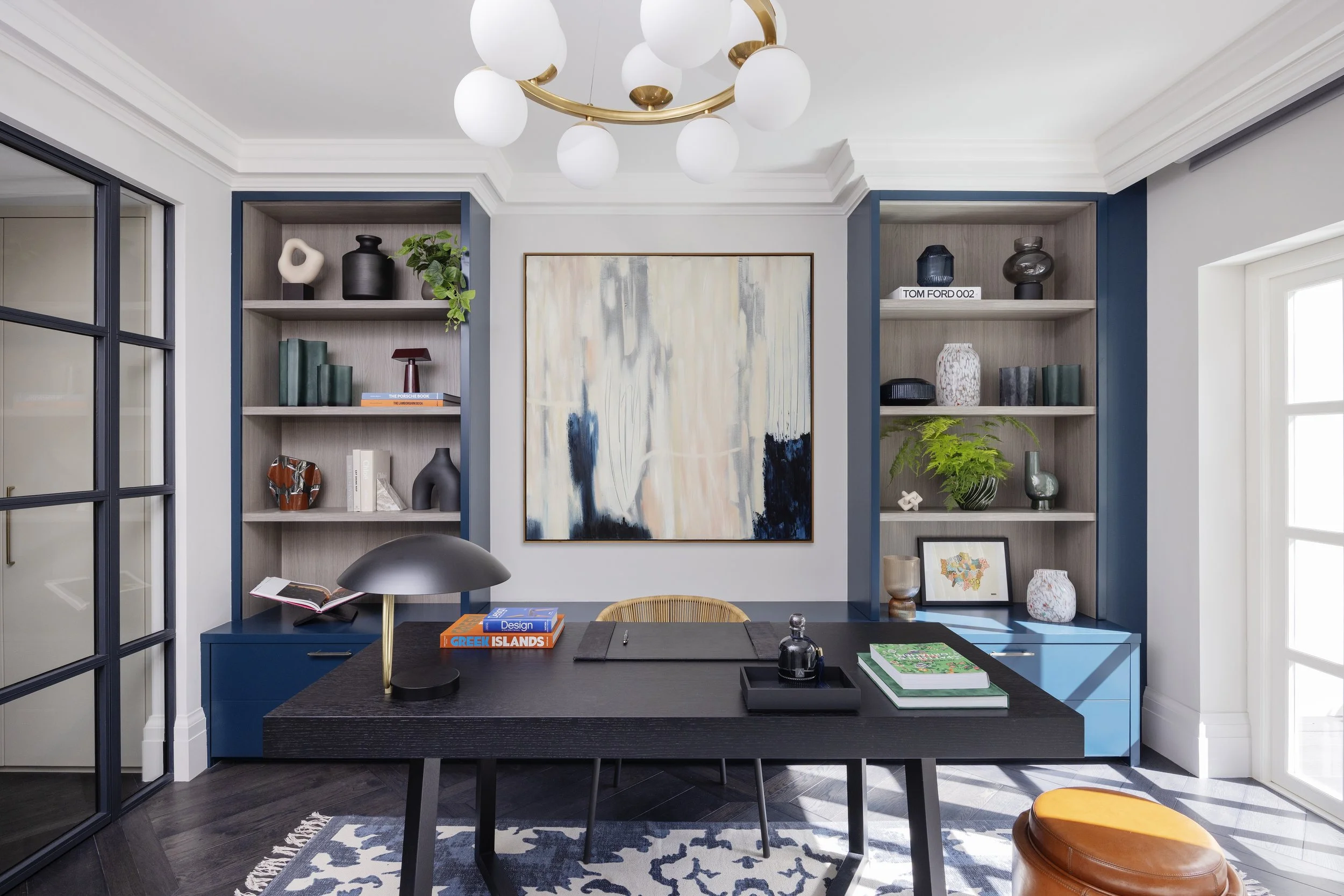
London project by Zulufish. Photo by Anna Stathaki HR
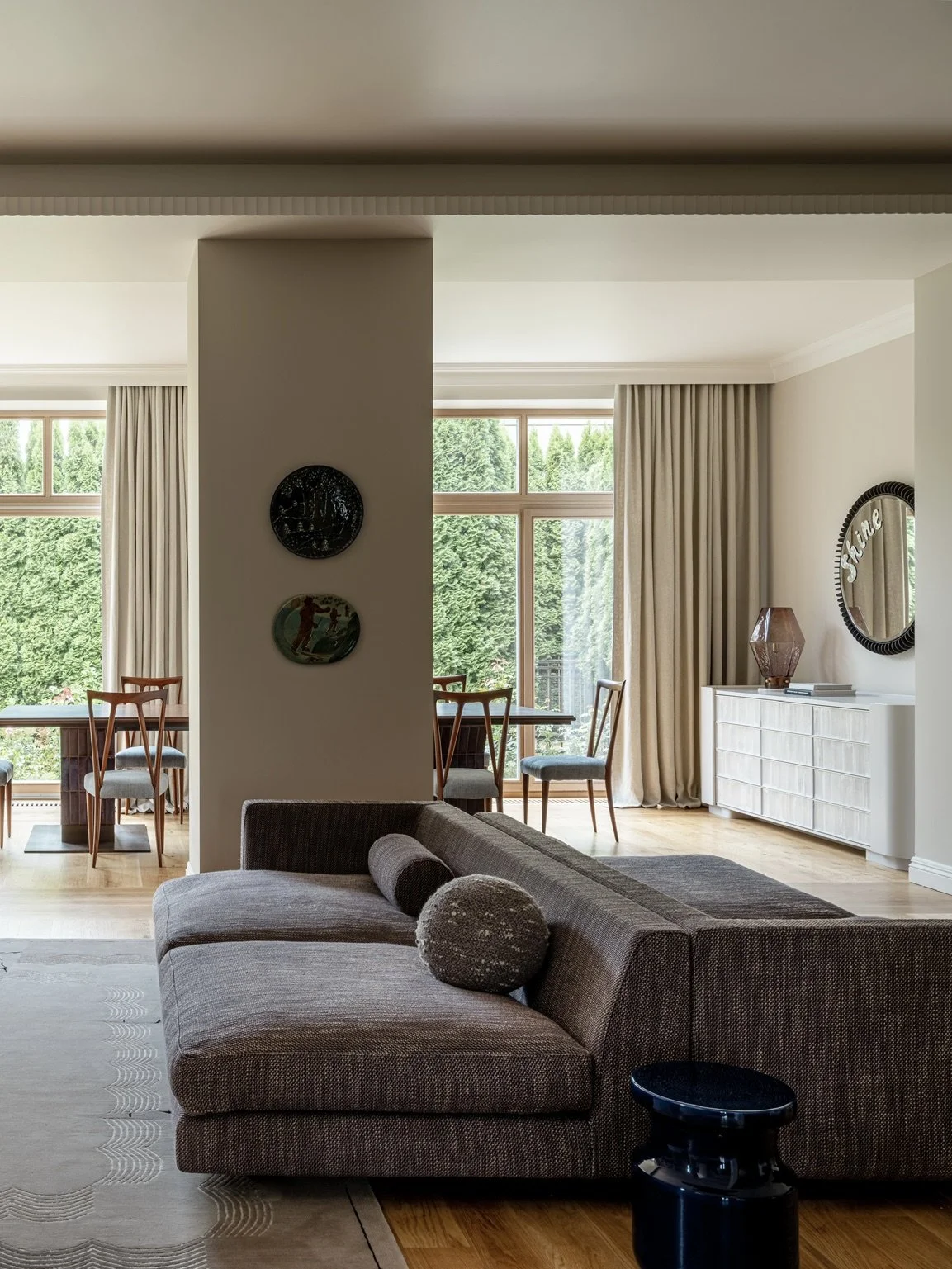
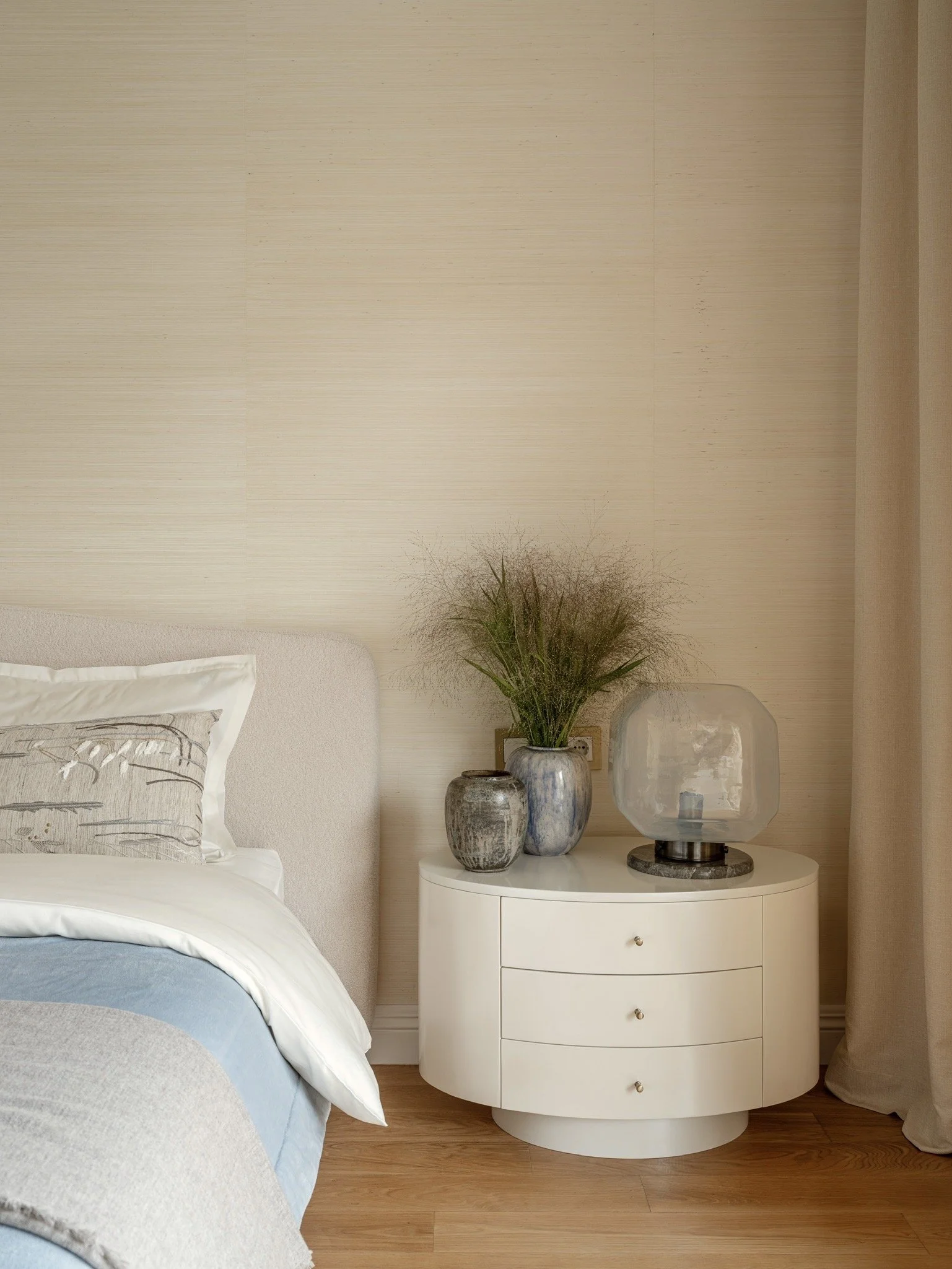
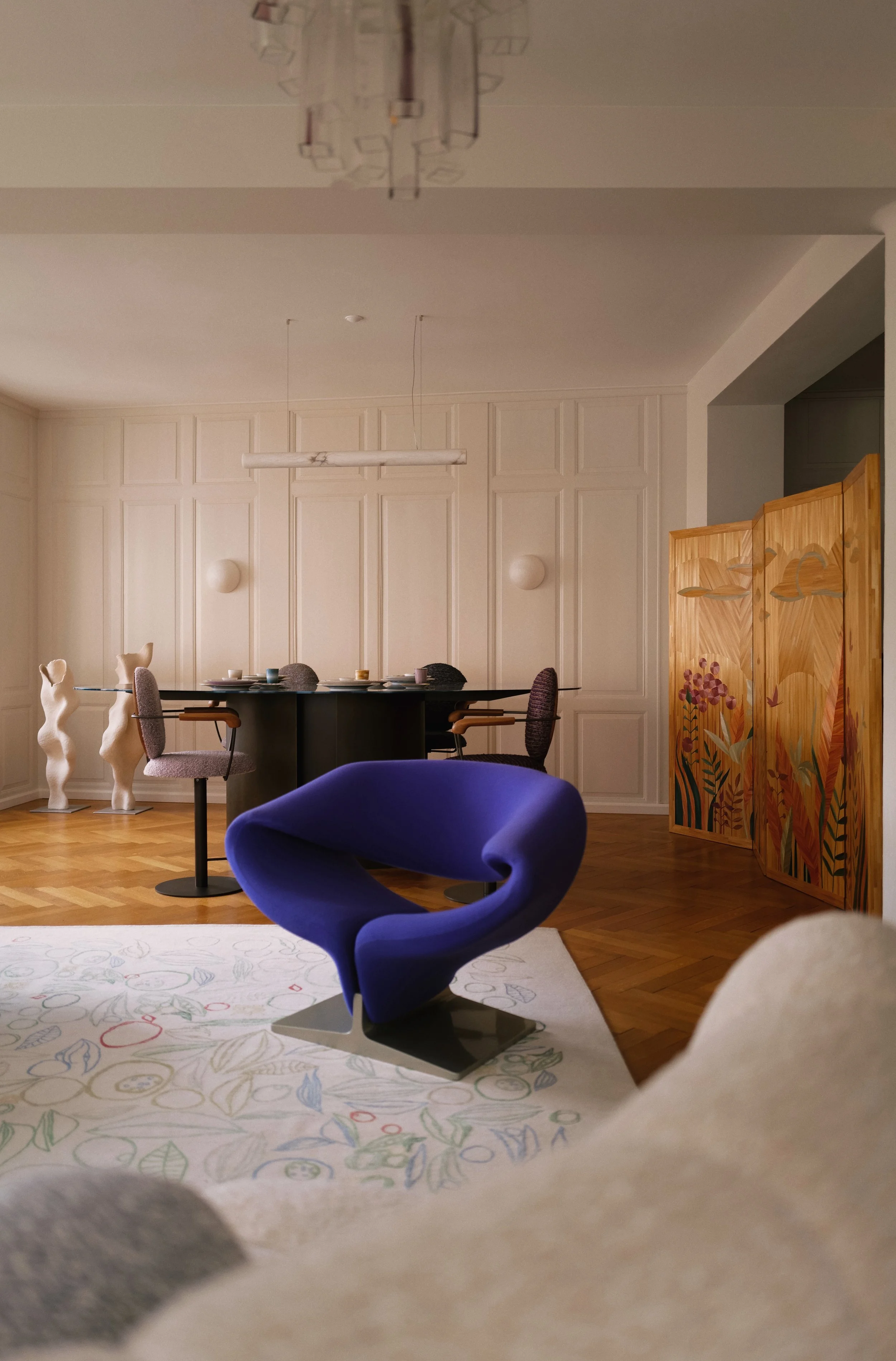
Residential project by KATERINA BULGAKOVA Studio
CM: “Art is an incredibly personal, deeply subjective choice. As Picasso so beautifully said, “Art washes away from the soul the dust of everyday life.” I have always loved that sentiment, because choosing art for your home is just that, an emotional investment. It is about selecting pieces that stir something within you; works that inspire, evoke memories, spark conversation and quietly become part of your own story. Beyond the emotional pull, art brings a richness to an interior, adding colour, pattern, texture and soul. Whether you are adding to a much-loved collection or just beginning to gather pieces, there are so many thoughtful ways to elevate art within a space.
Ultimately, art in the home should feel personal and instinctive. Choose what moves you. Live with it. Let it tell your story”.
How should you choose an artwork for your home: should it "match" the interior, or create a deliberate contrast?
KBS: “Honestly, I find both of these approaches a bit limiting. The idea that art should "match" the interior often leads to something decorative yet lifeless. When someone tells me they want a painting that "goes with" their living room, to me that sounds as boring as buying all the furniture and lighting for an entire house in one store, from a single manufacturer. I suppose what they are looking for is a feeling of security — a desire to stay on the safe side”.
“As my closest childhood friend, now a cofounder of a renowned art gallery, once explained to me, there are two types of collectors: those who buy art because they follow their hearts, and those who treat it as an investment, leaving emotions aside. Sometimes both intentions coexist, obviously. As you can see, neither reason leads to art objects matching the interior — or vice versa. The only thing art, or an entire interior, should match is its owner. It should give you inspiration, make your mind swirl, stir your emotions, bring the desire to tell stories about your collection. That is the only way to feel confident about your investment".
What interior design tips would you give to someone who already has an art collection?
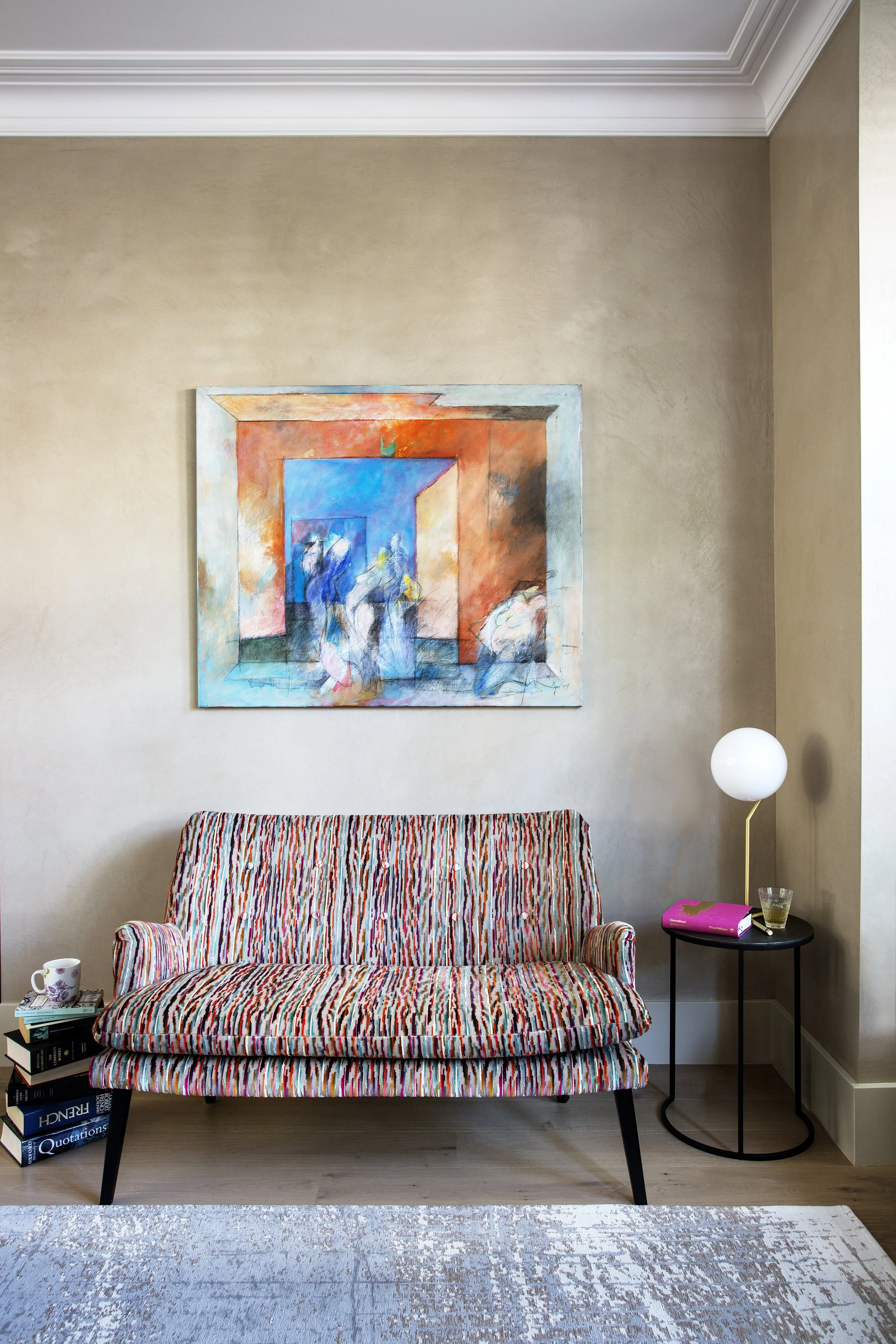
CM: “If you already have a collection, take gentle cues from its palette. You might choose full immersion, echoing a dominant tone across walls for a cocooning effect, or you may prefer a lighter touch: a note of colour picked up in your upholstery, or through the accessories – whether cushions, a rug or throw. When colours subtly flow from canvas to room, the whole space feels considered and harmonious. The artwork begins to breathe; it settles, rather than simply hangs”.
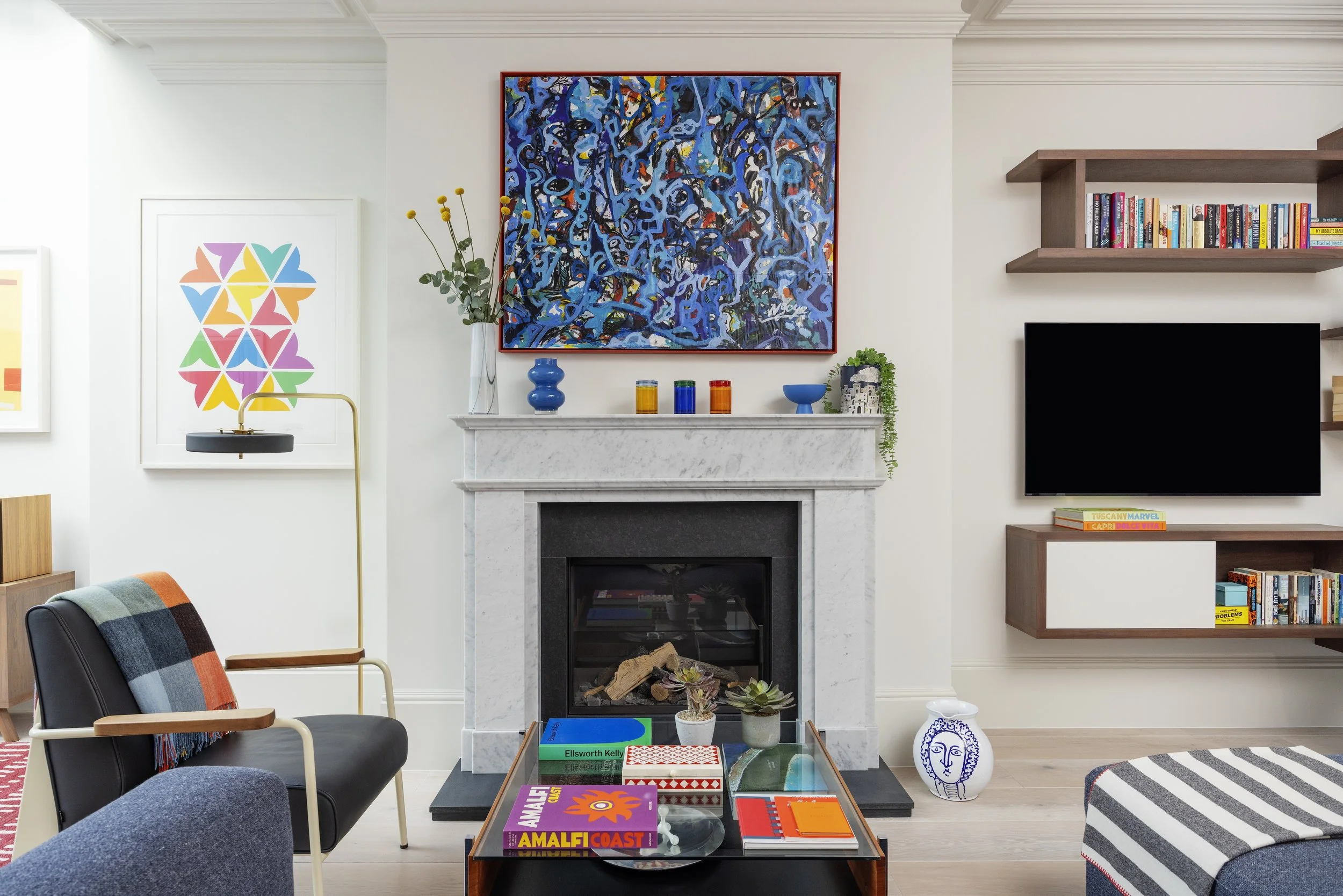
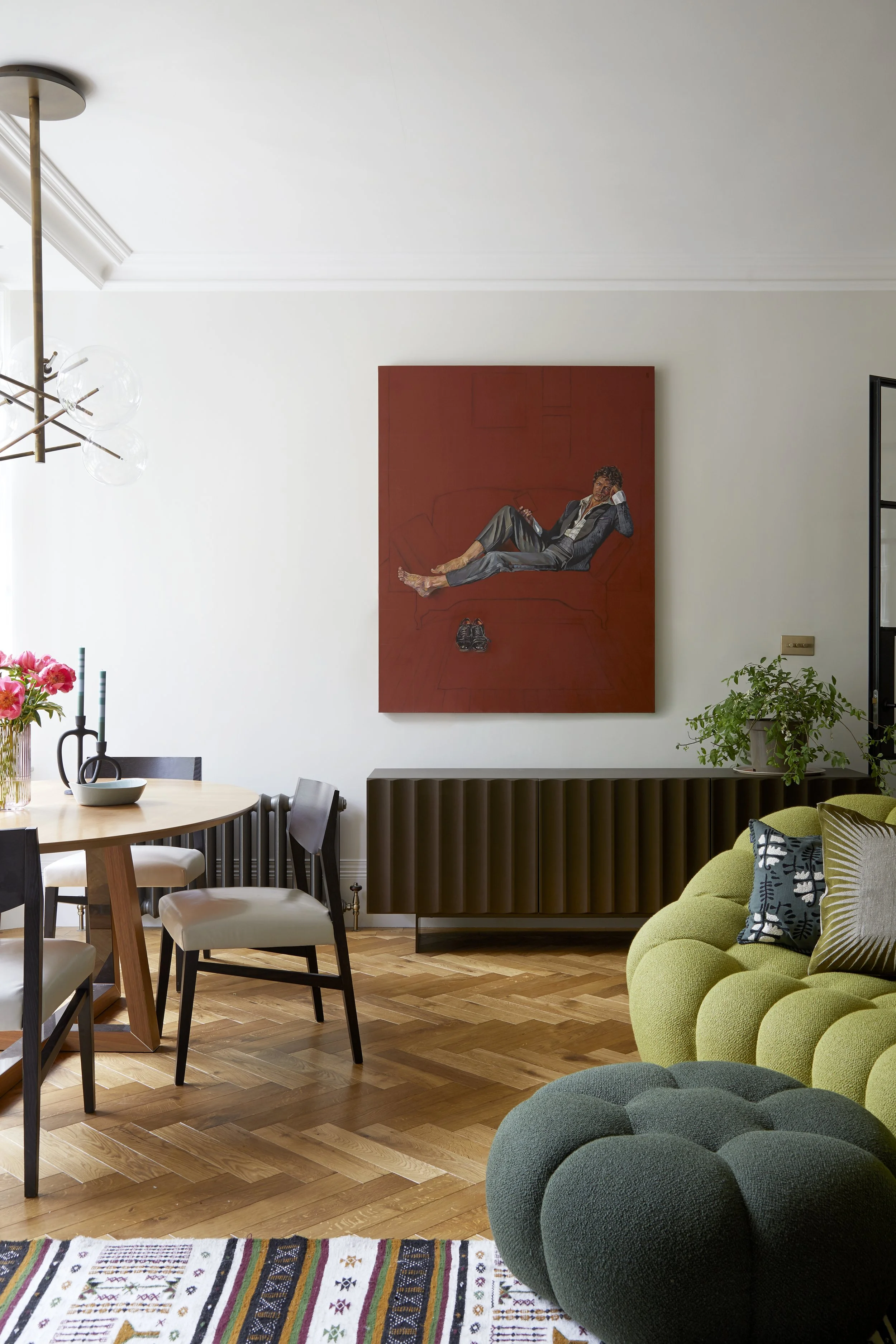
London Project by Zulufish
What advice would you give to someone looking for the best place in their home to hang their artwork?
CM: “Consider the rhythm of pieces across a wall, thinking about how the eye travels and where it pauses. A gallery wall can feel wonderfully expressive, especially with an eclectic mix of frames that add another layer of character. Conversely, if the artworks themselves are bold, abstract or exuberant, pared-back framing allows them to truly sing. I often suggest finding a quiet thread to connect a grouping, perhaps florals, still life, or even a shared tonal quality, so that the collection feels cohesive without being contrived. There is also joy in the unexpected such as a small painting in a narrow corner, bringing personality and joy to a space that might otherwise be overlooked.
Think about the journey through a space. Where does the eye naturally land? Where could you create a moment of pause? Art can draw you forward, soften transitions and even compensate where architectural detailing is limited, such as a fireplace. Consider elevating favourite pieces with beautiful brass picture lights, which will add warmth and focus as well as casting a gentle glow.”
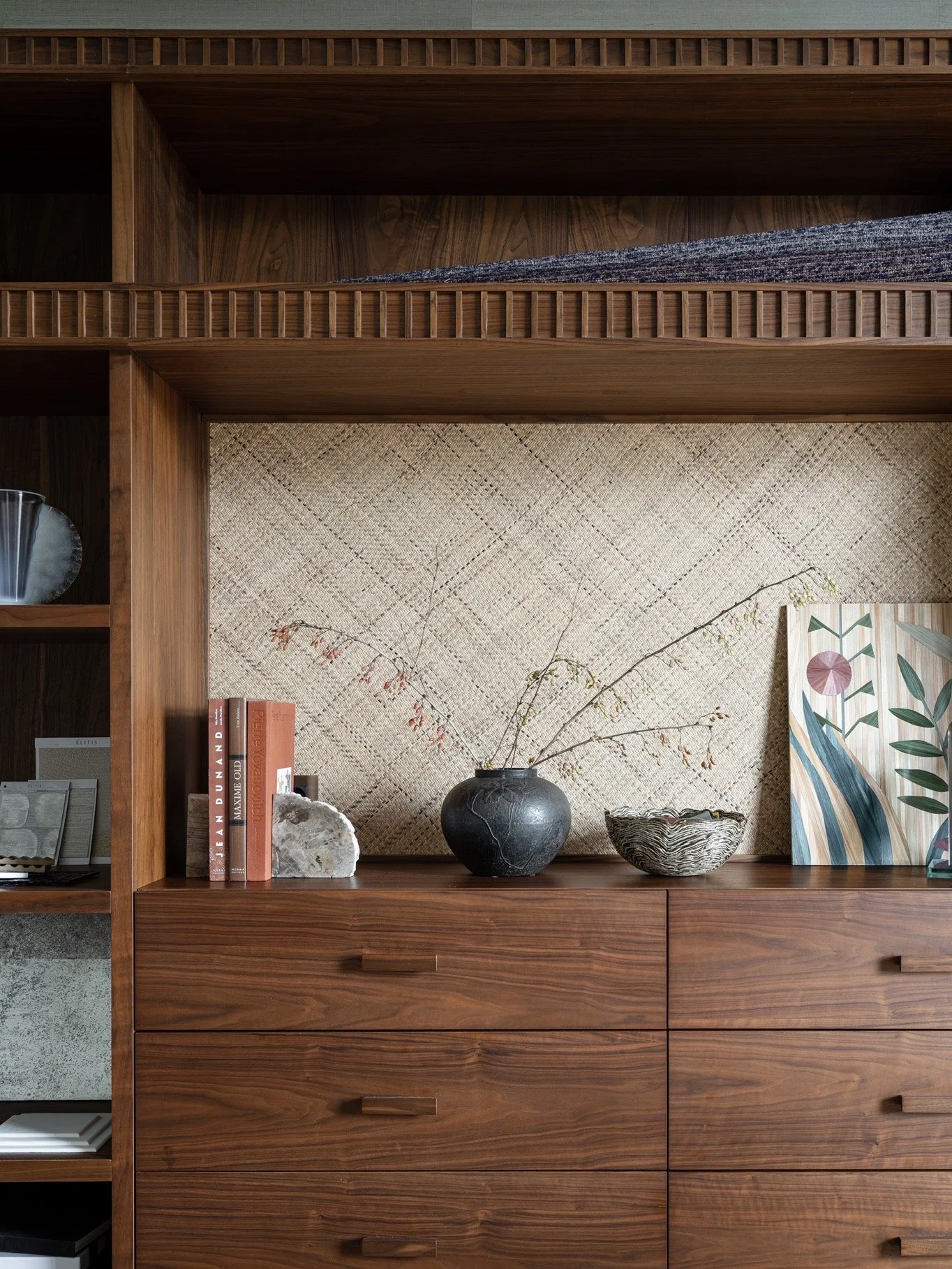
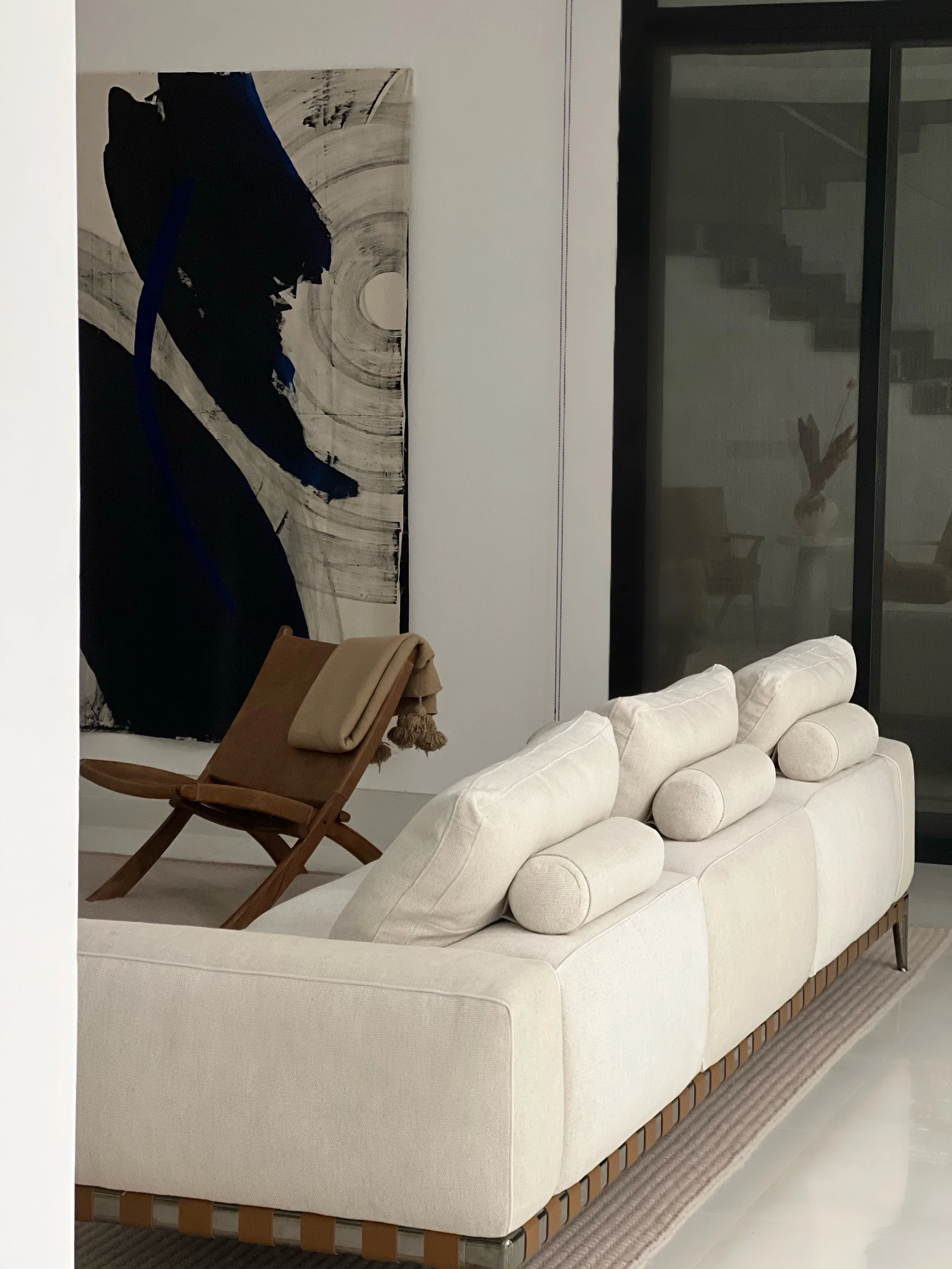
Residential project by KATERINA BULGAKOVA Studio
Do you use art fairs as a source of inspiration for your projects?
KBS: “For me, art fairs are about encountering something I didn't know I was even looking for. There is always something in the air — something difficult to explain, yet something that becomes absolutely tangible as soon as you come back home and begin to create passionately. People, objects, the stories behind them — you can fully absorb it all only while being present in those surroundings. That physical encounter is irreplaceable. No catalogue, book, or screen can offer you the same privilege. There are times when we look for special pieces together with our clients — often we visit fairs side by side. We are not searching for something specific, but rather a feeling. We might even start a project by visiting an art fair. Seeing someone connect with a piece in person, watching them touch a surface or stand in front of a sculpture longer than they expected to — that tells me more about what their home should feel like than any brief ever could”.
Where else would you suggest to start the search for art?
CM: “When it comes to sourcing art, the search is part of the pleasure. Alongside established galleries, I am always inspired by graduate shows, where you can find fresh talent and new perspectives. Equally, there is magic in an afternoon spent wandering through antique shops, second-hand stores or auction houses. Often, it is the unexpected discovery that becomes the piece you treasure most”.